


Shamanism and Mythology – Plants, Symbols
and Spiritual Knowledge
Shamanism and Mythology
Shamanism and mythology have been part of the training at “Licht aus der Jurte Shamanic Centre Vienna” for many years, both in the shamanic training and in the program Spiritual Healing – Healing Shamanism.
Mythologies reveal the connections between human beings and their fellow humans, between the living and the dead, between humans and the gods. They also show the relationship between present, past, and future. Mythologies that have endured until today are also teachings of healing that appeal to wisdom and insight.
Mythology and Shamanism for Human Understanding
There is always the danger that we project our own thoughts and concepts into mythology. In shamanism, as it is practiced at
“Licht aus der Jurte”, we place emphasis on the opposite: discovering the unfamiliar within ourselves.
In our shamanic work, our aim is to recognize the continuing presence of mythologies within our present spiritual world.
It is also about following hidden lines of connection in our own personal lives – connections that do not merely convey historical knowledge, but that unite and make tangible “what holds the world together at its innermost core,” as J. W. Goethe expressed it.
Nature and Plants
Mythologies also tell of plants, symbols, and forces of nature that have accompanied human beings for thousands of years.
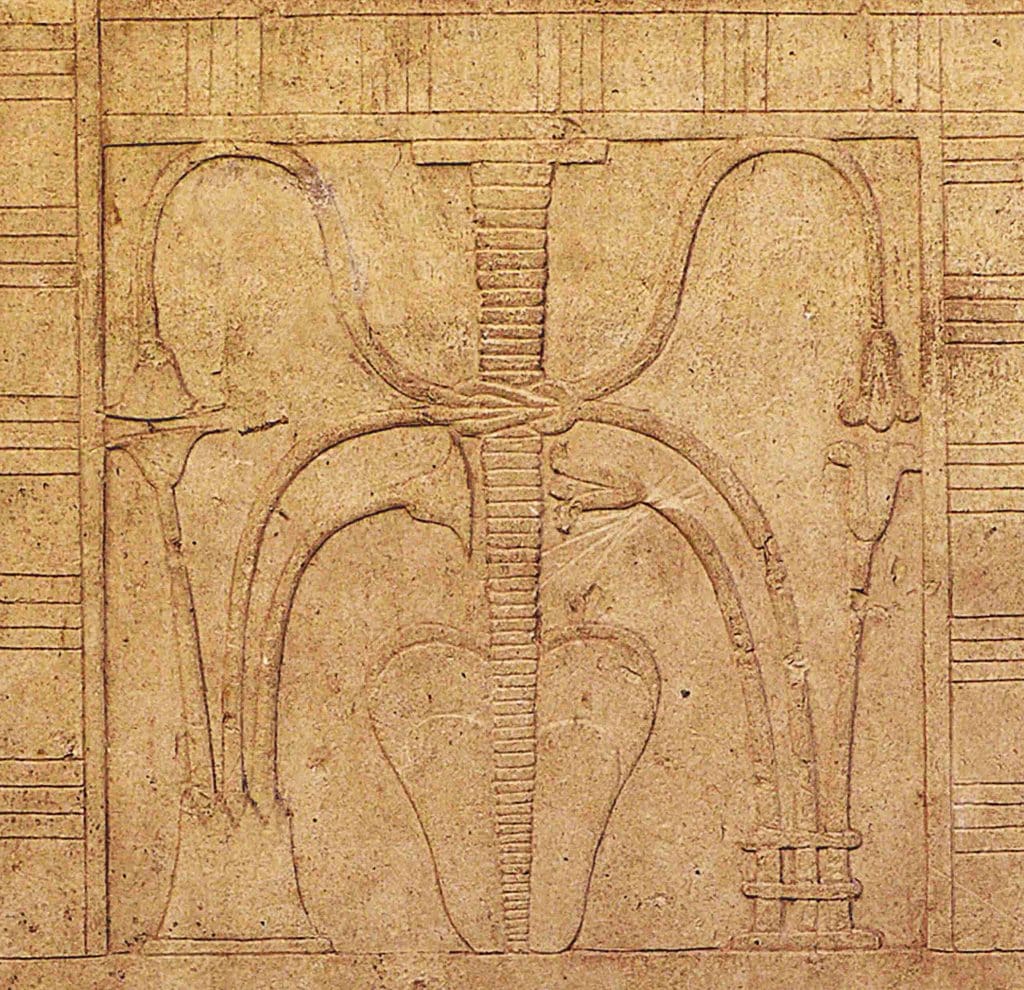
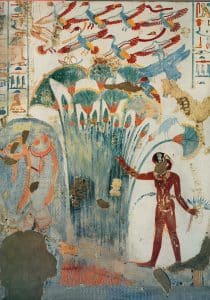
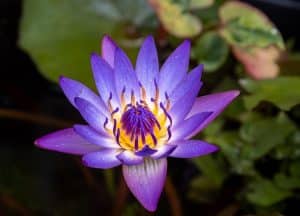
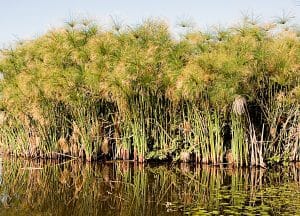
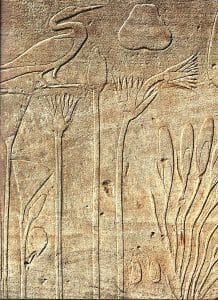
Among these special plants are the water plants of the Nile. In ancient Egypt, lotus and papyrus were not only part of the landscape, but became powerful symbols of culture and religious imagination.
While papyrus stood for life, order, and cultural flourishing, the lotus became a sign of light, rebirth, and renewal.
Why Mythology Is Important Today
Especially in our time, when many people search for orientation, meaning, and a renewed relationship with nature, looking at these ancient traditions can help rediscover connections that seem to have been lost.
The cultures of the past understood plants not only as food or medicine, but also as expressions of a spiritual order within nature.
Those who engage with these traditions can recognize how closely nature, culture, and spiritual experience were intertwined in earlier civilizations.
This understanding can help us reconsider the meaning of plants and symbols within contemporary spiritual paths and in shamanic practice.
Healing Shamanism and Traditional Knowledge
In a time when traditional knowledge has been lost in many places or is passed on only in fragments, healing shamanism consciously creates space to study and understand such connections again and to place them within a broader spiritual context.
Lotus and papyrus remind us that from still waters new life and new light can arise.
Lotus and papyrus lead us back to a mythology in which nature and spiritual experience once formed a unity – and remind us that this connection can still be rediscovered today.
Mythologies, regardless of the context in which they stood, were cosmic forces of order that contained all spiritual qualities of being. They guided the lives of people toward harmony and togetherness.
Cosmic forces found through them their paths, rhythms, and effects. They were not mystical speculations.

Shamanism and Mythology – Explained Briefly
Shamanism and mythology belong closely together in many cultures. Mythological traditions describe the relationships between humans, nature, gods, and the spiritual world.
In shamanic understanding, these stories are not merely tales from the past, but expressions of living knowledge about the order of nature. Plants, animals, and symbols – such as lotus and papyrus – carry special spiritual meaning in many mythologies.
Shamanism and Mythology – Questions
What is the connection between shamanism and mythology?
Mythologies describe the relationship between humans, nature and the spiritual world.
Why were lotus and papyrus important in ancient Egypt?
Both plants symbolized life, renewal and the cosmic order of nature.